
When Not To Reface Cabinets: 7 Warning Signs
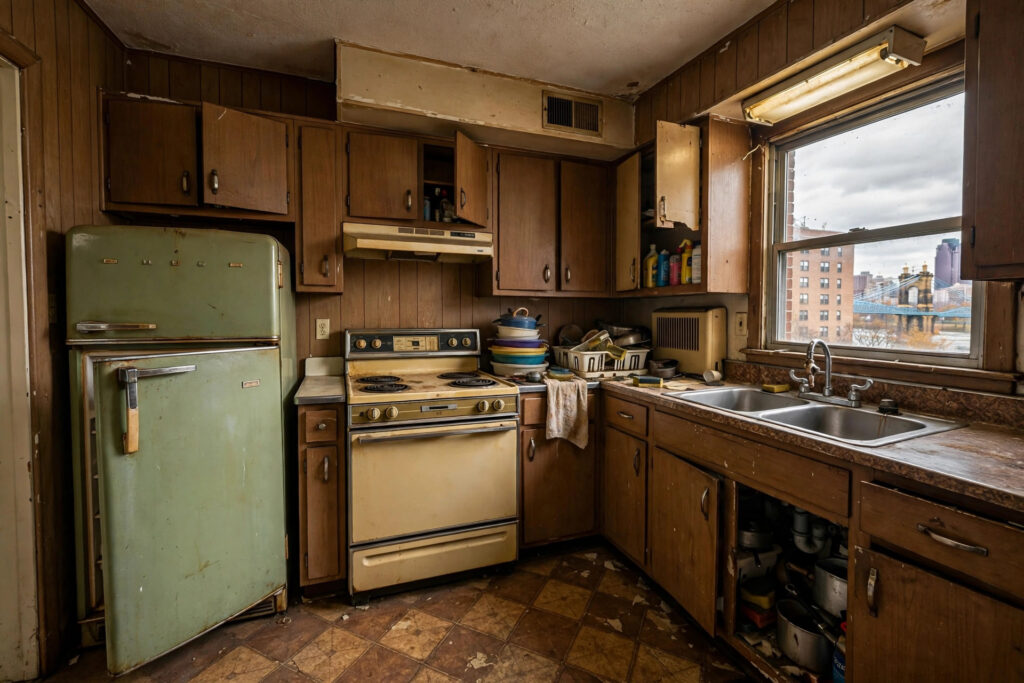
7 Signs You Should Remodel Instead
Refacing over damaged boxes or a bad layout wastes money. Here are the warning signs that mean you should remodel instead.
Cabinet refacing is a fantastic value — $4,000–$9,500, done in 3–5 days, lasting 15–20 years. But it’s not right for every kitchen. Refacing puts beautiful new surfaces on your existing cabinet boxes, which means the boxes have to be worth keeping.
This guide covers the seven warning signs that mean you should replace instead of reface — so you don’t spend thousands on a project that can’t deliver what you need. An honest contractor will walk through this same checklist during your estimate. If yours doesn’t, that’s warning sign number eight.
1. Water Damage
The number one disqualifier. Open the cabinet under your sink — the most common site of water damage in any kitchen. If the floor of the cabinet is swollen, soft, discolored, or crumbling, that box is structurally compromised. Veneer bonds to solid surfaces; it can’t rescue rotted particleboard or delaminated plywood.
Small, contained damage to a single cabinet doesn’t necessarily kill the whole project — that one box can often be replaced while the rest are refaced. But widespread water damage, especially across multiple lower cabinets, means the underlying structure isn’t worth investing in. Replace.
2. Warped or Twisted Boxes
Cabinet boxes should be square and true. If frames are visibly warped, twisted, or racked — doors that never sat right, gaps that change with the seasons — new doors won’t fix the geometry underneath. Hanging precision-made new doors on crooked boxes gives you expensive doors that still don’t close properly.
A quick test: open a few doors and look at the face frames. If the frames themselves are bowed or the boxes feel rickety when you push them, refacing is putting lipstick on a structural problem.
3. Broken or Failing Frames
Cracked face frames, separated joints, shelves collapsing under normal loads — these are structural failures, not cosmetic ones. Refacing is a cosmetic solution. It cannot rejoin a broken frame or restore load-bearing strength to a compromised box.
This is also where age matters less than condition: plenty of 40-year-old cabinets have rock-solid boxes worth refacing, while some 15-year-old builder-grade boxes are already falling apart. Condition, not age, is the test.
4. The Layout Wastes Space or Doesn’t Work
This is the most commonly overlooked disqualifier. Refacing keeps your exact layout — every cabinet stays where it is. If your kitchen’s problems are about configuration rather than appearance, no finish will fix them:
- Dead corner cabinets you can’t reach into
- A work triangle that has you hiking across the kitchen
- Nowhere near enough pantry or drawer storage
- Appliances in awkward positions you’d love to relocate
If you find yourself thinking “I wish this wall were different” every time you cook, refacing will give you a beautiful version of a kitchen you still don’t like. That’s the most expensive kind of regret — paying twice when you remodel for real three years later. (If your layout works but you just need it to look new, refacing is ideal — see is cabinet refacing worth it.)
5. You Need Significantly More Storage
Refacing can add organizers, pull-outs, and better hardware inside existing boxes — genuinely useful upgrades. But it cannot create storage where no box exists. If your kitchen is fundamentally short on cabinetry and there’s wall space or floor space for more, replacement (or a partial remodel) lets you add boxes. Refacing can’t.
Rule of thumb: if your wish list includes the words “add a pantry,” “add an island with storage,” or “more cabinets,” you’re describing new boxes, not new faces.
6. You’re in a Luxury Market Expecting Custom
Context matters. In most Cincinnati neighborhoods, refaced cabinets read as “updated kitchen” and appraise accordingly — the 70–80% ROI holds. But in luxury markets where buyers expect true custom cabinetry, refaced stock boxes may not meet buyer expectations at the price point.
This isn’t about snobbery; it’s about matching the investment to the market. If comparable homes selling around yours feature custom inset cabinetry and high-end built-ins, refacing mid-range boxes could underdeliver at resale. Your real estate agent can tell you what your specific market expects.
7. The ” bones” Are Builder-Grade and Already Failing
Some kitchens were built with the cheapest possible boxes — thin particleboard, stapled joints, paper-thin backs. If those boxes are already showing their age at 10–15 years old, veneering them is a short-term patch on a short-lived structure. The math changes: refacing cheap boxes that might last another 8 years is worse value than replacing with quality boxes that last 30.
How to tell: knock on the cabinet sides. Solid plywood or furniture-board boxes sound dense and solid. Thin particleboard sounds hollow and may already be swelling at edges and joints. A contractor can assess this in minutes during an estimate.
What to Do Instead: Your Options
If one or more warning signs apply, you’re not out of options — you’re just shopping in a different category:
| Your situation | Best path | Typical cost |
|---|---|---|
| Mostly sound boxes, 1–2 damaged | Replace damaged boxes + reface the rest | $5,000–$11,000 |
| Sound boxes, bad layout | Full remodel or partial reconfiguration | $15,000–$50,000+ |
| Failing builder-grade boxes | Full cabinet replacement, same layout | $20,000–$60,000+ |
| Sound boxes, just dated color | Cabinet painting | $1,800–$5,500 |
The hybrid option in the first row is underused: there’s no rule saying every box must be treated identically. Replacing two ruined sink-base cabinets and refacing eighteen sound ones is often the smartest spend of all.
How an Honest Estimate Works
Here’s what should happen when a reputable company evaluates your kitchen for refacing:
- They open your cabinets. Not just the doors — they look inside boxes, under the sink, at joints and shelves.
- They check for square. Warped frames and racked boxes get flagged.
- They ask about your layout. What frustrates you about the kitchen? What would you change?
- They give you a straight answer — including “refacing isn’t right for this kitchen, and here’s why.”
If an estimator glances at your kitchen for five minutes and quotes refacing without opening a single cabinet, that’s not an estimate — it’s a sales call. The inspection is the expertise you’re paying for.
The Bottom Line
Don’t reface cabinets with water damage, warped or broken boxes, a layout you hate, or fundamentally inadequate storage. In those cases, replacement or remodeling is the honest recommendation — and spending $7,000 on refacing now plus $30,000 on a remodel later is the most expensive possible path.
But if your boxes are sound and your layout works, refacing remains one of the best values in home improvement. The key is knowing which kitchen you have before you spend a dollar.
CincyEdge’s cabinet refacing service in Cincinnati starts with a real inspection — we’ll open every cabinet and tell you straight whether refacing is right for yours. Free estimates: (877) 708-9363.
When Not to Reface: FAQs
When should you NOT reface kitchen cabinets?
Don’t reface when boxes have water damage, warping, or broken frames; when the layout wastes space or frustrates you daily; when you need significantly more storage; or when your market expects true custom cabinetry. In these cases, replacement or remodeling is the better investment.
Can water-damaged cabinets be refaced?
No — not the damaged boxes. Veneer needs a solid surface to bond to, and it can’t restore rotted or delaminated material. Isolated damage to one or two cabinets can be handled by replacing just those boxes and refacing the rest.
What if my kitchen layout is bad — will refacing help?
No. Refacing keeps every cabinet exactly where it is; it changes appearance, not configuration. If the layout is the problem, you need remodeling. Refacing a layout you hate gives you a beautiful kitchen you still don’t like.
How do I know if my cabinet boxes are strong enough to reface?
Open them up: look for swelling, softness, discoloration (water damage), warping, cracked frames, and separated joints. Knock on the sides — solid plywood sounds dense; failing particleboard sounds hollow. A professional inspection during your estimate confirms it.
Is it worth refacing cheap builder-grade cabinets?
Often not, if the boxes are already failing. Refacing thin particleboard boxes with a short remaining life is worse value than replacing with quality boxes that last decades. But many builder-grade kitchens have perfectly sound boxes — condition matters more than original price point.
Can I replace some cabinets and reface the rest?
Yes, and it’s often the smartest option. Replacing one or two damaged boxes (like a ruined sink base) while refacing the sound ones gives you an all-solid kitchen without paying for full replacement.