
Countertop Edge Profiles: A Style & Cost Guide For Cincinnati Kitchens
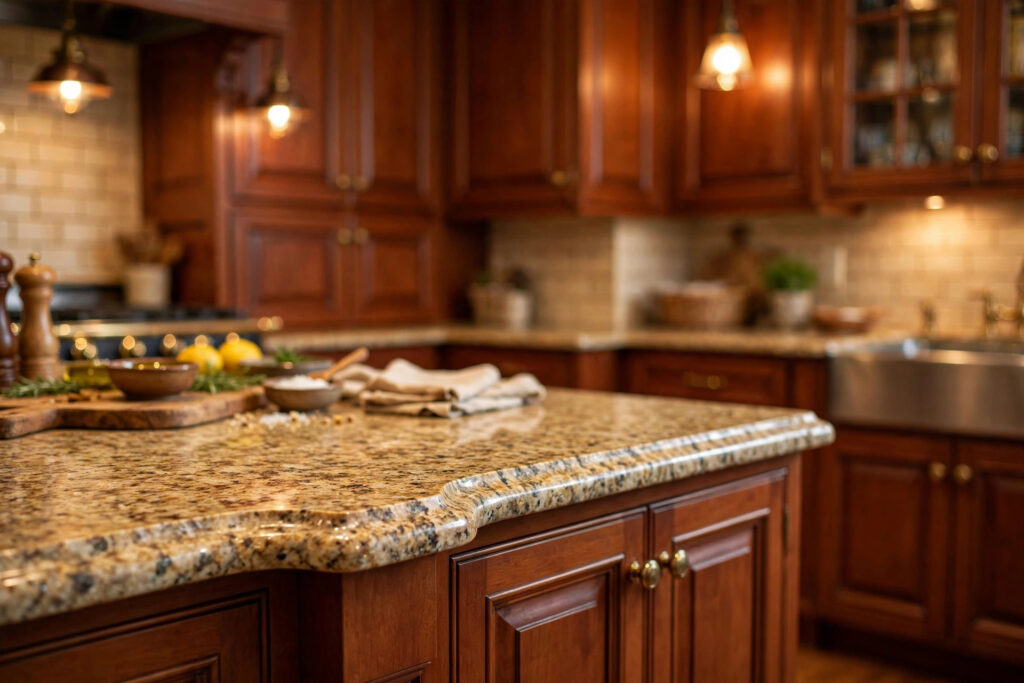
The Detail That Defines the Style
The edge profile sets your countertop’s whole style — and some profiles cost far more than others. Here’s how to choose.
You picked your stone — quartz or granite, maybe after reading our quartz vs granite comparison. Now comes the detail most homeowners never think about until the fabricator asks: what edge profile do you want? The edge is the two-inch strip you see and touch every time you lean on your counter, and it quietly sets the whole style tone of your kitchen.
This guide walks through the most popular countertop edge profiles, what each one costs, which kitchen styles each suits, and how edge choice affects cleaning and durability. By the end you will be able to answer your fabricator in one sentence instead of staring blankly at a sample board.
What Is a Countertop Edge Profile?
The edge profile is simply the shape of the countertop’s exposed edge — the front lip and any visible sides. Fabricators cut and polish it from the same slab as your counters, so it is integral to the stone, not an add-on trim piece.
Why does it matter? Three reasons:
- Style: a crisp eased edge reads modern; an ogee reads traditional. The edge is jewelry for your counters.
- Cost: simple edges are usually included in the base fabrication price; ornate profiles add labor and therefore dollars per linear foot.
- Upkeep: elaborate profiles have more nooks where crumbs and grease collect; simple edges wipe clean in one pass.
The Most Popular Edge Profiles, Compared
1. Eased Edge (a.k.a. Flat Polish)
The eased edge is a square edge with the sharp top corner very slightly softened. It is the default “modern” edge — clean, crisp, and honest. Because it requires the least shaping, it is almost always included in the base price with no upcharge, which makes it the most popular choice in new Cincinnati builds from West Chester to Loveland.
Best for: modern, contemporary, and transitional kitchens. Cost: typically included. Cleaning: easiest — one straight wipe.
2. Bullnose (Full and Half)
The bullnose rounds the edge into a soft half-circle. Full bullnose rounds top and bottom; half bullnose rounds only the top, leaving a flat bottom. It is the friendliest edge in the lineup — no sharp corners for hips or toddlers to find — which is why it shows up constantly in family kitchens.
Best for: traditional kitchens, households with small children. Cost: usually a small upcharge over eased. Cleaning: easy; the curve wipes clean, though drips can run underneath on full bullnose.
3. Ogee
The ogee is the classic furniture edge: an S-shaped curve that steps from convex to concave. It is the most formal, traditional profile and it photographs beautifully. It is also the most labor-intensive common edge, which shows up in the price — expect a meaningful per-linear-foot upcharge, and know that its crevices collect crumbs more than simpler edges.
Best for: traditional and luxury kitchens, especially paired with raised-panel cabinets. Cost: among the highest standard profiles. Cleaning: needs a little extra attention in the curves.
4. Waterfall Edge
Technically a design feature rather than an edge profile: the countertop material continues vertically down the side of the island or peninsula to the floor, like water flowing over a fall. It is dramatic, modern, and expensive — you are paying for a full extra slab section plus precision mitering. On islands in open-concept Cincinnati homes, it is a genuine showstopper.
Best for: modern islands and peninsulas. Cost: significant — priced more like added square footage than an edge upgrade. Cleaning: simple vertical surface, easy to wipe.
5. Mitered Edge
The mitered edge glues two pieces at 45 degrees to create the look of extra-thick stone — a chunky 2-inch-plus edge from standard slabs. It delivers the bold, substantial look of thick stone without paying for full-thickness slabs throughout. Very popular with quartz, where the pattern continues cleanly around the miter.
Best for: contemporary kitchens wanting a bold look. Cost: moderate upcharge for the mitering labor. Cleaning: easy.
6. Chiseled / Rough Edge
The chiseled edge is broken by hand (or hand-look tooling) for a rustic, old-world texture. It suits Tuscan and rustic designs beautifully and hides small chips better than any polished edge. It is the hardest to keep crumb-free, so think twice if you do a lot of pastry work.
Best for: rustic, Tuscan, and farmhouse styles. Cost: moderate to high (handwork). Cleaning: most demanding — texture traps debris.
How Much Do Edge Profiles Cost?
Fabricators typically price edges per linear foot of exposed edge, on top of the base per-square-foot slab price:
- Eased / straight polish: usually included in base price.
- Half bullnose, bevel: small upcharge, roughly $5–$15 per linear foot.
- Full bullnose, ogee, dupont: moderate upcharge, roughly $10–$25 per linear foot.
- Waterfall sides: priced like additional material — often several hundred dollars per side depending on height.
For a typical Cincinnati kitchen with 20–25 linear feet of exposed edge, the difference between a basic eased edge and an ogee usually lands in the low hundreds of dollars — noticeable, but small next to the total project cost. Where it really adds up is large islands with waterfall sides or double ogee detailing everywhere.
Tip: ask your fabricator for edge pricing before you fall in love with a sample. And confirm whether the quote includes polishing the underside of overhangs — breakfast-bar seating areas look unfinished without it.
Matching Edge Profiles to Your Kitchen Style
- Modern / contemporary: eased, mitered, or waterfall. Keep lines crisp.
- Transitional (Cincinnati’s most common): eased or half bullnose — clean but not stark.
- Traditional: ogee or full bullnose, especially with detailed cabinetry.
- Farmhouse / rustic: chiseled edge or simple eased with a thick mitered look.
One more consideration: household reality. If you have toddlers, the bullnose’s rounded edge is genuinely kinder than a crisp eased corner at hip height. If you roll a lot of dough, a simple eased edge gives you a smooth, uninterrupted work surface with nowhere for flour to hide.
Edge Profiles and Cleaning
Your edge choice affects your weekly wipe-down more than you would think. Simple profiles (eased, half bullnose) clean in a single pass. Ornate profiles (ogee, chiseled) need a soft brush or an old toothbrush in the crevices every so often — not a big deal, but worth knowing before you commit.
Whatever edge you choose, the daily care routine for the stone itself does not change. See our quartz vs granite cleaning guide for the full routine, including sealing schedules and what never to use.
Our Picks for Cincinnati Kitchens
If you want a straight recommendation: for most of the custom kitchen countertops we install across Greater Cincinnati — from Montgomery colonials to Hyde Park bungalows — the eased edge is the sweet spot. It is included in the price, suits nearly every cabinet style, and cleans in seconds. Step up to half bullnose for a softer traditional feel, or go waterfall on the island if you want one dramatic moment in an open-concept space.
Choosing counters? CincyEdge templates digitally, shows you full slabs before cutting, and quotes edge upgrades line by line — no surprises. Call (877) 708-9363 for a free estimate.
Countertop Edge Profile FAQs
What is the most popular countertop edge profile?
The eased edge — a square edge with a slightly softened top corner. It is clean, modern, suits almost every kitchen style, and is typically included in the base fabrication price.
How much extra do upgraded edge profiles cost?
Simple upgrades like half bullnose or bevel run roughly $5–$15 per linear foot; ornate profiles like ogee run roughly $10–$25 per linear foot. For a typical kitchen that means a few hundred dollars total. Waterfall sides cost significantly more since they use extra slab material.
Which edge profile is easiest to clean?
Eased and half bullnose — both wipe clean in one pass. Ogee and chiseled profiles have curves and texture that trap crumbs and need occasional detailing with a soft brush.
What edge profile is best for a modern kitchen?
Eased, mitered (for a thick look), or a waterfall island edge. All three keep lines crisp and contemporary.
Is a bullnose edge safer for kids?
Yes — the rounded bullnose has no sharp corners, which is kinder to toddlers and hips in busy family kitchens. It is one of the main reasons families choose it.
Can I mix edge profiles in one kitchen?
You can — a common approach is an eased edge on the perimeter with a waterfall or mitered edge on the island. Just keep the mix to two profiles maximum so the kitchen still feels cohesive.