
How Much Does An Outdoor Kitchen Cost In Cincinnati? (2026 Guide)
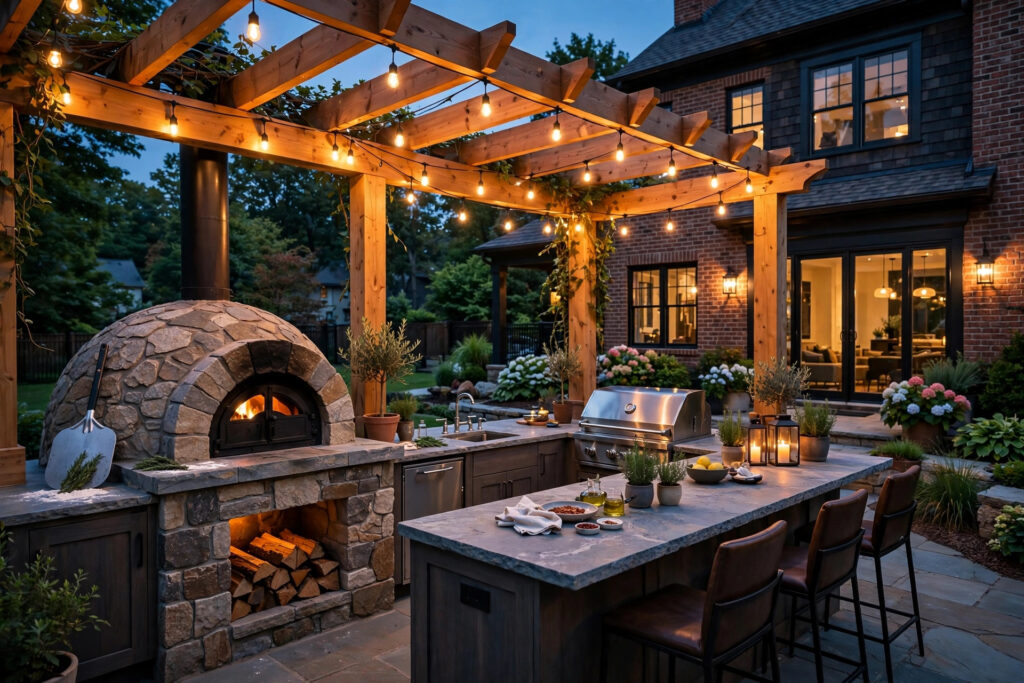
From a Few Thousand to $50K+
Outdoor kitchens in Cincinnati span a huge price range. Here’s what drives the cost — and where the money actually goes.
Cincinnati summers were made for backyard cooking — but what does an outdoor kitchen actually cost here? The honest answer is a wide range: from around $5,000 for a simple grill island to $30,000+ for a full outdoor living space with refrigeration, pizza oven, and lighting. Most homeowners land somewhere in the middle.
This guide breaks down real 2026 cost ranges, what drives the price up or down, fresh industry data on what Americans are actually spending, and how to save money without building something you will regret. All numbers grounded in the Cincinnati market.
Outdoor Kitchen Cost Ranges (2026)
| Tier | Typical cost | What you get |
|---|---|---|
| Basic grill island | $5,000–$10,000 | Built-in grill in a stone or stucco island, basic countertop, no plumbing |
| Mid-range outdoor kitchen | $10,000–$20,000 | Grill + side burner, sink with plumbing, refrigerator, lighting, quality counters |
| High-end outdoor living | $20,000–$30,000+ | Pizza oven or smoker, full bar, premium appliances, pergola or roof, heaters, high-end stone |
Industry data backs up these brackets. The RTA 2026 outdoor kitchen study found median project orders between $14,014 and $25,793, with the middle 80% of projects falling between $10,330 and $33,807 — and homeowners spending about 18% more year over year as outdoor living keeps trending up.
What Drives the Cost Up or Down
Appliances: the biggest lever
A basic built-in gas grill starts around $1,500 installed; a premium grill with rotisserie, sear station, and smoker box can top $8,000 alone. Add a side burner ($500–$1,500), outdoor-rated refrigerator ($1,000–$3,000), sink with plumbing ($1,500–$3,000 installed), and a pizza oven ($3,000–$10,000+) and you can see how appliance choices swing the total by five figures.
Structure and materials
The island structure itself — framed, sheathed, and finished in stone veneer, stucco, or tile — typically runs $3,000–$8,000 depending on size and finish. Countertops follow indoor pricing logic: concrete and tile are budget-friendly; natural stone and porcelain slabs cost more but handle Midwest freeze-thaw cycles better.
Utilities: gas, water, electric
Running a gas line, water line, and dedicated electrical circuits to the backyard is real skilled-labor cost — often $2,000–$5,000 combined depending on distance from the house. This is also the part you cannot DIY in most Cincinnati-area municipalities: permits and licensed trades are required for gas and electrical work.
Shade and shelter
A pergola adds roughly $10–$60 per square foot depending on material and whether it is roofed. Shade sails cost less; a full roofed structure costs more but extends your cooking season dramatically — worth considering in a city where prime outdoor months run May through October.
Midwest Winters: Build for Them
Cincinnati freeze-thaw cycles punish the wrong materials. Here is what holds up:
- Stainless steel (304 grade): the standard for outdoor appliances and a must — it resists rust through wet winters.
- Natural stone and concrete counters: handle freeze-thaw well when properly sealed.
- Porcelain tile: frost-rated porcelain is excellent outdoors.
- Avoid: regular indoor-rated appliances, unsealed natural stone, and anything with exposed plain steel.
Winterization is simple: shut off and drain water lines before the first hard freeze, cover the grill, and disconnect the refrigerator or switch it to a model rated for cold ambient temperatures. A built outdoor kitchen with proper materials lasts 15–25 years — versus a portable grill setup you will replace several times in the same span.
How to Save Money on Your Outdoor Kitchen
- Phase the build: install the grill island and utilities now; add the pizza oven, bar, or pergola next season. Trenching once for all future utilities saves the most.
- Choose your splurge: spend on the grill and the structure; save on finishes you can upgrade later.
- Keep it close to the house: every extra foot of gas, water, and electrical trenching costs money. Building near the existing kitchen wall minimizes utility runs.
- DIY what is safe: painting, landscaping around the kitchen, and simple paver patios are fair game. Leave gas, electrical, and plumbing to licensed pros.
- Pick durable mid-range materials: concrete counters and quality grill brands hit the value sweet spot — premium looks without luxury pricing.
Is It Worth It? The Value Question
Short version: outdoor kitchens are among the best-recouping backyard improvements you can make. Longer version — including 2026 ROI data and what Cincinnati buyers actually pay extra for — is in our companion guide: do outdoor kitchens add home value?
Getting a Real Number for Your Backyard
Online ranges only go so far — your yard’s slope, distance to utilities, and appliance wishlist determine your actual price. The most useful next step is an on-site estimate where a builder can see what you are working with.
CincyEdge designs and builds custom outdoor kitchens in Cincinnati — from simple grill islands to full outdoor living spaces — built for Midwest winters and backed by our workmanship warranty. Call (877) 708-9363 for a free estimate.
Permits and Inspections in the Cincinnati Area
Budget both money and time for permits — they are not optional for the utility work:
- Electrical and gas: always require permits and licensed contractors, plus inspections before the work is covered up. Permit fees are typically a few hundred dollars; the real cost is scheduling inspections into the timeline.
- Plumbing: a new water line and drain for an outdoor sink needs a plumbing permit and inspection in most Hamilton County jurisdictions.
- Structures: pergolas and roofed structures often need zoning approval, especially near property lines — check setback rules with your township before finalizing the design.
- HOAs: many Cincinnati-area subdivisions require architectural review for visible backyard structures. Get approval in writing before breaking ground.
A reputable builder handles permit applications as part of the project — if a contractor suggests skipping permits to “save money,” that is your cue to find a different contractor. Unpermitted work becomes your problem at resale.
Outdoor Kitchen Cost FAQs
What is the average cost of an outdoor kitchen?
$5,000–$30,000+ depending on scope. Basic grill islands start around $5,000; mid-range kitchens with sink, fridge, and lighting run $10,000–$20,000; full outdoor living spaces exceed $30,000. The RTA 2026 study puts median projects at $14,014–$25,793.
How can I save money on my outdoor kitchen?
Phase the build (utilities first, extras later), keep the kitchen close to the house to minimize utility trenching, splurge on the grill and structure while saving on finishes, and DIY only the safe parts like landscaping — leave gas, electric, and plumbing to licensed pros.
What features should I include in my outdoor kitchen?
The core four: a quality built-in grill, prep counter space, storage, and lighting. Popular upgrades include a sink with running water, outdoor refrigerator, side burner, pizza oven, and bar seating. Start with what you will use weekly, not what photographs well.
Can I build an outdoor kitchen myself?
Partially. You can DIY structures, finishes, and landscaping, but gas lines, electrical circuits, and plumbing require licensed professionals and permits in the Cincinnati area. Most homeowners use a builder for the core and DIY the cosmetic touches.
What materials survive Cincinnati winters in an outdoor kitchen?
304-grade stainless steel appliances, sealed natural stone or concrete counters, and frost-rated porcelain tile. Winterize by draining water lines before the first hard freeze and covering the grill.
How long does it take to build an outdoor kitchen?
A basic grill island takes 1–2 weeks; a mid-range kitchen with utilities takes 3–5 weeks including permits and inspections; elaborate projects with pergolas and multiple appliances can run 6–10 weeks.