
LVP Vs Tile Kitchen Flooring: Which Should You Choose?
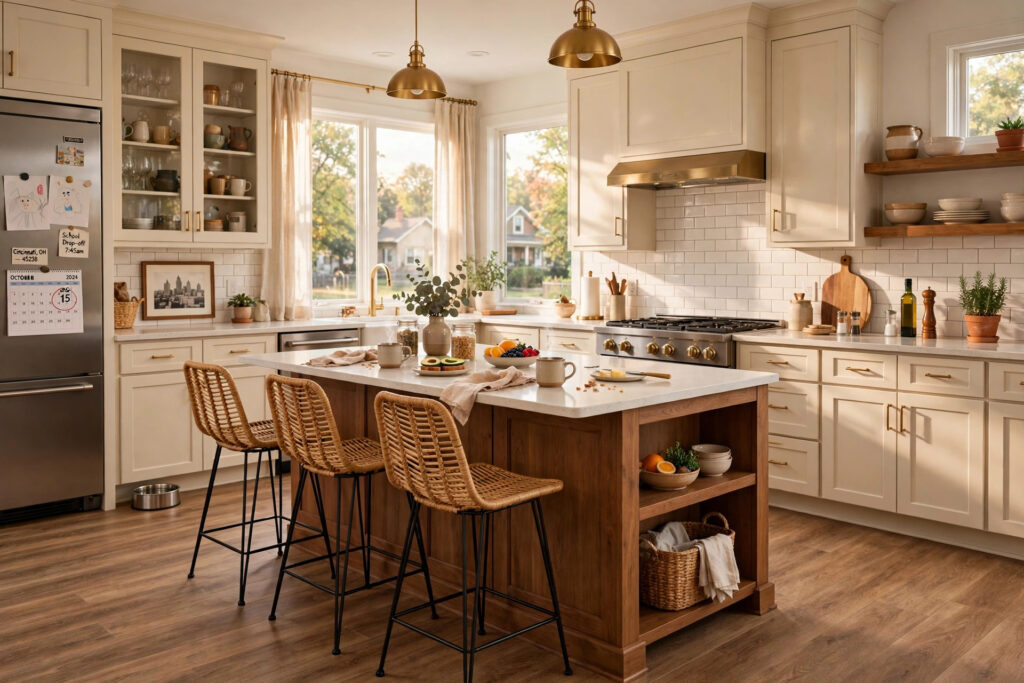
Warm and Affordable vs Built for Decades
LVP is warmer and cheaper; tile lasts decades longer. Here’s which one wins for a busy Cincinnati kitchen.
Walk into any flooring showroom in Cincinnati and you will hear the same debate: luxury vinyl plank (LVP) or tile? Both dominate modern kitchen remodels, both handle water far better than the hardwood they often replace, and both have passionate fans. But they feel different underfoot, install differently, age differently, and suit different households.
This guide compares LVP and tile across the factors that matter in a real kitchen — durability, water resistance, comfort, grout, installation, cost, and looks — so you can pick the right floor for how your household actually lives.
What Are LVP and Tile, Exactly?
LVP (luxury vinyl plank) is a rigid, multi-layer vinyl flooring printed with hyper-realistic wood (or stone) visuals and finished with a transparent wear layer. Most kitchen-grade LVP is 100% waterproof and installs as floating click-lock planks — no glue, no grout. Its square-shaped sibling, LVT (luxury vinyl tile), is the same material in tile-look squares; durability is essentially identical, only the look differs.
Tile in kitchens almost always means porcelain or ceramic. Porcelain is denser, harder, and less porous than ceramic, which is why installers recommend porcelain for kitchen floors. It is set in mortar over a prepared subfloor, grouted, and sealed at the grout lines.
Durability: Which Lasts Longer?
Tile wins on raw durability. A quality porcelain tile floor can last 30–50 years — it is essentially permanent. It resists scratches, dents, and fading better than any vinyl. Dropped a cast-iron skillet? The skillet loses.
LVP is durable but not immortal. Quality products carry 15–25 year residential warranties, and the wear layer (measured in mils — look for 20 mil or higher for kitchens) determines scratch resistance. In high-traffic areas LVP will eventually show wear paths, and sharp grit tracked in on shoes is its worst enemy. Large dogs with untrimmed nails can leave their mark over time.
The honest framing: tile is a “forever” floor; LVP is a “couple of decades” floor. Both outlast the kitchen design trends around them.
Water Resistance
Both handle kitchen water well, with one important caveat each:
- LVP: the planks themselves are waterproof — standing water will not damage them. But water can seep between planks at the seams if left pooling for hours (think dishwasher leak discovered after a weekend away). Quality click-lock systems minimize this, but it is not zero.
- Tile: porcelain is effectively waterproof, but grout is not. Unsealed or worn grout absorbs water and harbors mildew. Sealed grout performs well, but the seal needs refreshing every year or two in wet zones.
For true peace of mind against leaks, see our waterproof kitchen flooring options guide.
Comfort Underfoot
This is where LVP pulls ahead decisively. Vinyl has slight give — it is softer, warmer, and quieter than tile. If you cook for an hour every evening, stand at the island helping kids with homework, or have anyone with joint issues in the house, the difference is real and daily.
Tile is hard, cold, and loud. In Cincinnati winters, a tile floor over an unheated crawlspace or slab can feel genuinely chilly at 6 AM — area rugs and radiant heat help, but they add cost. Tile’s hardness is also less forgiving when you drop a glass (it shatters) versus LVP (it might survive).
Household rule of thumb from the research: homes with kids, pets, or elderly family members tend to favor vinyl’s shock absorption and warmth; households prioritizing permanence lean tile.
Grout: Tile’s Hidden Maintenance Tax
LVP has no grout. Tile has grout lines every 12–24 inches across your entire kitchen, and grout is where tile floors show their age. It stains, it darkens in high-traffic lanes, and it needs periodic sealing and occasional deep cleaning.
Mitigations exist: epoxy grout resists staining far better than traditional cement grout (at a higher install cost), larger tiles mean fewer grout lines, and darker grout hides discoloration. But if the phrase “scrubbing grout lines” makes you tired, that feeling is data — lean LVP.
Installation: Time, Mess, and Subfloor
LVP is the easiest kitchen floor to install: click-lock planks float over most existing floors (even old tile, if it is flat), a typical kitchen takes a day or two, and you can walk on it immediately. It is the most DIY-friendly option, though professional installation still gives tighter cuts around cabinets and appliances.
Tile is a multi-day, multi-trade-feeling project even with one installer: subfloor prep, mortar, setting, grout, cure time. You will be off the floor for days. It is also unforgiving of uneven subfloors — Cincinnati’s older homes in Clifton or Hyde Park often need leveling work before tile goes down, which adds cost.
Cost Comparison
Installed costs in the Cincinnati market typically run:
- LVP: roughly $4–$9 per square foot installed, depending on plank quality and wear-layer thickness.
- Porcelain tile: roughly $8–$15+ per square foot installed, depending on tile size, pattern complexity, and subfloor prep.
Tile’s labor is the big variable — intricate patterns, diagonal layouts, and subfloor leveling push it up fast. LVP pricing is more predictable. For a 200-square-foot kitchen, the installed gap often lands around $800–$1,500.
Looks: Can You Tell the Difference?
Ten years ago, yes. Today, high-end LVP fools most eyes at standing height — the wood visuals, grain texture, and plank variation are remarkably convincing. Tile still wins for stone looks and for large-format modern aesthetics, and nothing replicates real grout-line geometry like actual tile.
Design note: lighter floor tones visually open up small kitchens, a trick worth using in Cincinnati’s older, compartmentalized layouts. And a common question — should the floor be lighter or darker than the cabinets? Contrast beats matching: light floors with darker cabinets (or vice versa) creates depth; tone-on-tone can fall flat.
The Verdict: Which Should You Choose?
- Choose LVP if: comfort matters (you stand a lot), you have kids or pets, you want faster/cheaper installation, you dread grout maintenance, or your subfloor is less than perfect.
- Choose tile if: you want a permanent, once-and-done floor, you love authentic stone looks, your household is easy on floors, or you are remodeling a forever home.
Either way, professional installation matters more than the material debate — most flooring failures we see are subfloor and layout problems, not product problems. For kitchen flooring installation in Cincinnati, CincyEdge handles subfloor prep, material selection, and installation across Greater Cincinnati. Free estimates: (877) 708-9363.
LVP vs Tile FAQs
Is LVP good in the kitchen?
Yes — it is one of the best kitchen floors available. Quality LVP is waterproof, scratch-resistant, softer and warmer underfoot than tile, and installs quickly. Look for a 20-mil or thicker wear layer for kitchen use.
What is the lowest maintenance kitchen floor?
LVP and ceramic/porcelain tile are the two lowest-maintenance options. LVP wins overall because it has no grout lines to seal or scrub.
Should I choose ceramic tile or LVP in the kitchen?
Choose tile for maximum permanence and authentic stone looks; choose LVP for comfort, faster installation, lower cost, and zero grout maintenance. Households with kids, pets, or elderly members usually prefer LVP.
What is the easiest flooring to install in a kitchen?
LVP click-lock — it floats over most existing floors, a typical kitchen takes a day or two, and you can walk on it immediately. Tile requires subfloor prep, mortar, grout, and cure time.
What is the real difference between LVT and LVP?
Just shape and look: LVT comes in tile-look squares, LVP in wood-look planks. They are the same material with similar durability — pick based on the visual you want.
Are tiles better than vinyl for flooring?
It depends on the household. Tile is harder, more permanent, and better for resale prestige; vinyl is softer, warmer, quieter, and more forgiving for kids, pets, and older knees. Both are excellent kitchen floors when installed properly.